
One thing is certain: whatever weapons you currently have in inventory can become grossly obsolete after only a few days of war.
Yes, a large nuclear weapon will still work, but almost everything else risks becoming obsolete very quickly. I believe the next war will primarily be a war of industrial production. This is exactly what the war in Ukraine is showing us.
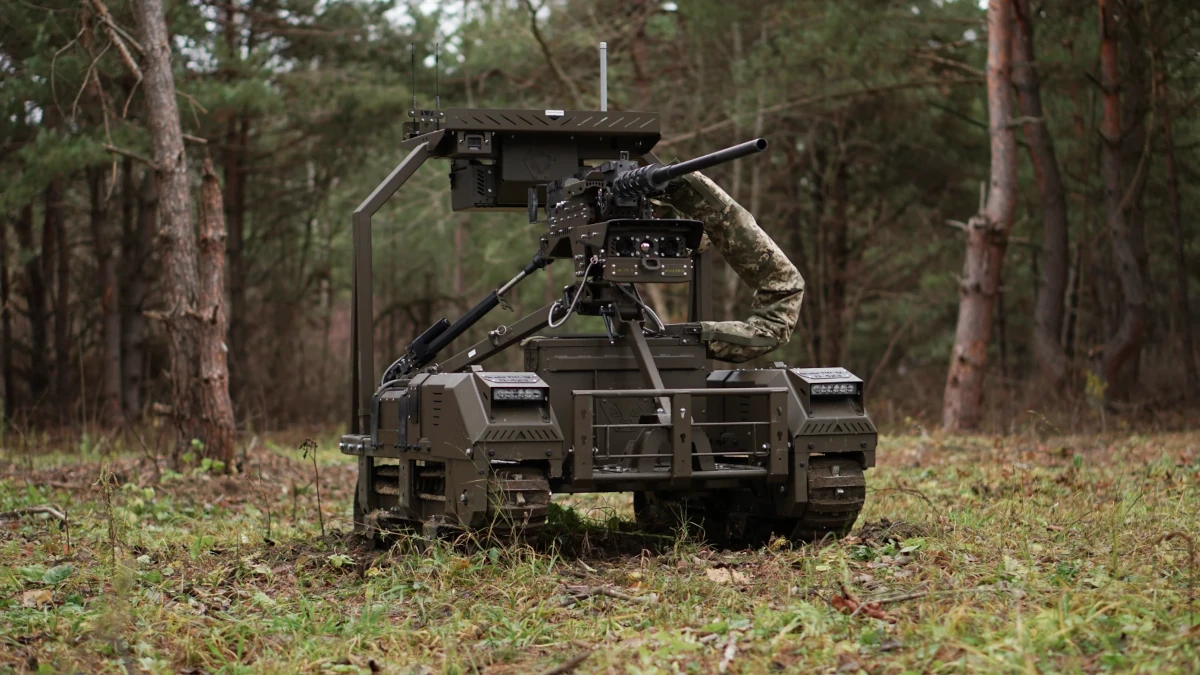
- Ground drones may become the most effective weapons in certain scenarios.
- Boat and submarine drones can replace manned ships. It will be extremely difficult to defend an aircraft carrier or a battleship against a large swarm of surface or underwater drones.
- Air superiority is becoming increasingly difficult in a world where drone swarms are present. While today a small consumer drone cannot intercept an F-16, it is very likely that within a few years, anything flying will feel an irresistible urge to return to the ground. Humans will be no match. Drone aircraft can withstand 10, 20, or even 40 G, while a human-piloted aircraft would kill its pilot under such loads.
To summarize more succinctly: large battleships, manned fighter aircraft, and even main battle tanks are on the path to becoming obsolete.
What comes next
I believe the traditional “battle tank” will be replaced by drones—some smaller, some faster, each designed to destroy specific targets. This will be an arms race in which almost any country could defeat an enemy of much larger size. However, two things are imperative:
- Weapons must be controlled by true allies—and protected from “fake allies.”
- In today’s world, this likely means weapons that are flexible and easily reconfigurable.
Most of these drones will need a reliable way to operate under radio-frequency jamming. Therefore, they will require:
- Wide-spectrum communications
- Frequency-agile systems
- Potentially free-space optical (infrared) communication, or any method that is difficult to jam.
Ground drones and Canada
Canada is in an excellent position to develop some of the best ground drones.
One of the effective systems deployed in Ukraine is the Droid TW 12.7. While it is clearly a capable machine, there is nothing preventing Canada from developing a similar drone—one inspired by the old machines of Joseph-Armand Bombardier. Such a platform could be powered by batteries, a Rotax engine, or a hybrid system.
Regarding the hydraulic gun mount, I would very much like to see whether the Quebec company Rotobec could apply its magic to create a fully stabilized 360-degree weapon system.
If we can field these units in large numbers, could we also equip them with directional microphones to detect the rotor wash of helicopters and triangulate their position? Can we have version that will shoot drone and helicopter out of the sky?
Boat and Submarine Drones
The war in Ukraine has shown us that a military organization without a single conventional ship can still take control of a body of water. Yes, we still need real submarines and a limited number of manned vessels, but we also need fast surface drones and submarine drones that can operate as swarms and become a nightmare for any manned ship.
These systems face the same challenge as other drones: radio communication and remote control under jamming conditions.
Air Superiority
For Canada, the debate between the F-35 and the Gripen is somewhat misguided. Canada needs to see its adversaries from very far away. The F-35 appears to be a poor fit for our specific needs, while the Gripen might be acceptable, depending on its onboard electronics.
That said, to monitor its immense territory, Canada should seriously consider platforms like the SAAB GlobalEye and likely acquire around 10 aircraft of the type. There is little point in using an F-35 for surveillance when a GlobalEye can see much farther and can rapidly cue or dispatch fighter aircraft when needed.
The Asymmetry of Drone Warfare
Drone warfare is extremely asymmetric. If it costs $1 million to neutralize a $1,000 drone, then you are effectively losing $999,000 at every engagement. That is not sustainable.
So the real question becomes: Can we field $100 drones that the enemy is forced to spend $1 million to destroy? I think that it is possible.
Why This Discussion on a “Right to Repair” Website?
Because I have noticed that companies selling weapons worth millions or billions of dollars also tend to withhold information. Even for military equipment, they are often not very transparent. In fact, in many cases, they attempt to sell ongoing monthly services—some based on actual outgoing service like satellite, others amounting to a form of extortion.
Take the Lockheed Martin F-35 as an example. If Canada purchases these aircraft, there are significant limitations on what Canada can maintain or repair independently.
Denied repair? Refusal to provide tools? Restricted access to diagnostic systems?
These questions should matter just as much in defense procurement as they do in civilian right-to-repair debates.